Chapter 1
Yellow Knolls
Before the light.
Before the light.
The hands moved in the dark.
They were a working woman’s hands — no rings, no polish, the knuckles thickened from years of wringing and lifting and putting things right. They moved with the deliberateness of a woman who had done this particular work before, which she had not, but who had done other work that required the same quality of attention. They brushed the girl’s hair back from her forehead. Smoothed it twice, the way you smooth a pillow. The girl’s face did not change.
The hands folded the girl’s hands across her stomach. Left over right.
Then they smoothed the gray t-shirt at the collar, working from the center outward, from the throat to the shoulders, until the fabric lay flat and even and said what it was meant to say.
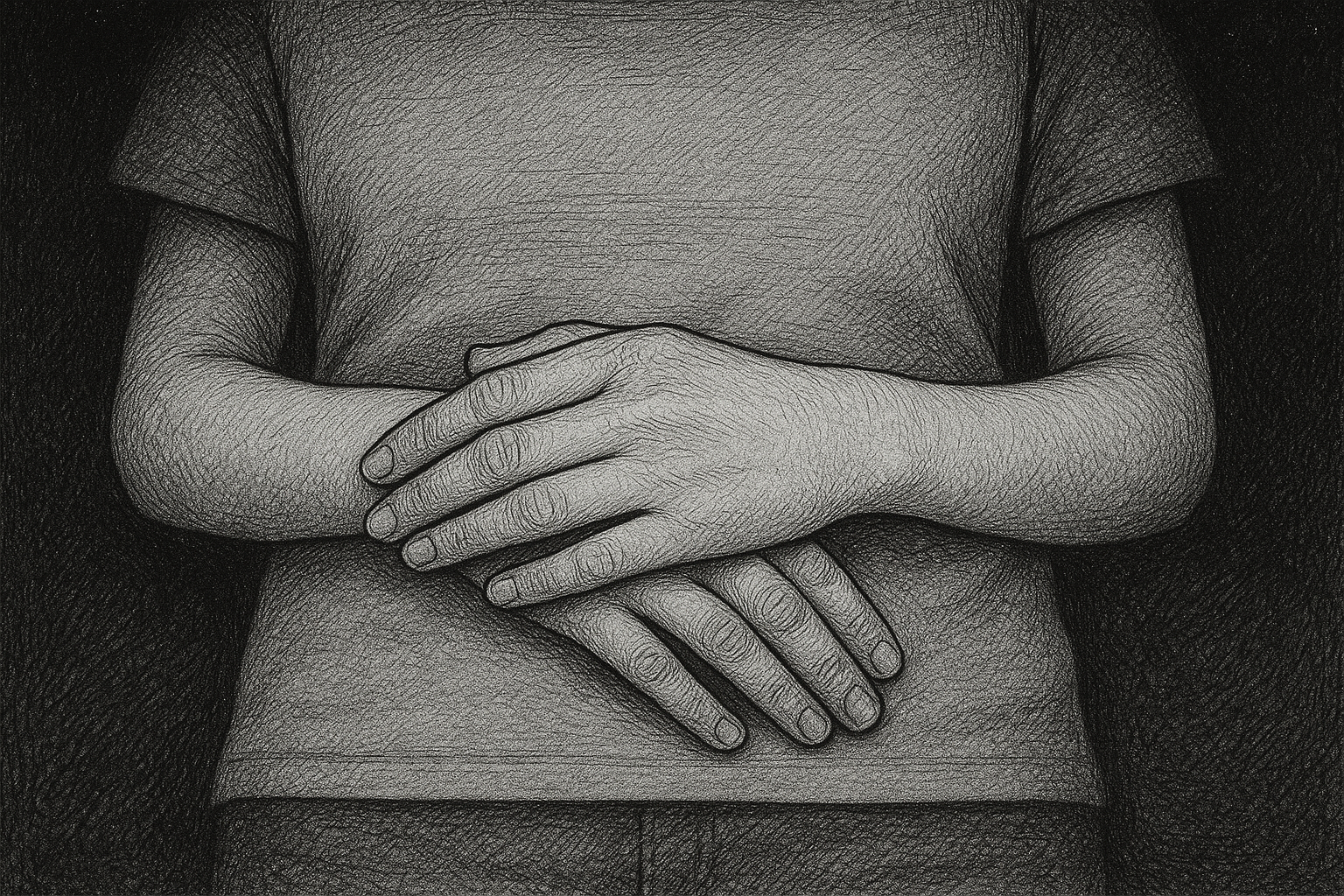
On the back of the right hand, in the pale pre-dawn, a burn scar caught what little light there was — old skin, puckered at the center, crosshatched where the healing had gone wrong.
She stood.
She stood for a moment above the girl and she was still. The wash held the dark and the cold. Creosote moved in a small wind off the knolls. She did not look at the road. She had looked at the road when she arrived and found it empty and it was still empty. She knew the sound of a vehicle at this distance and there was no sound.
She walked back up the cut between the knolls to the truck.
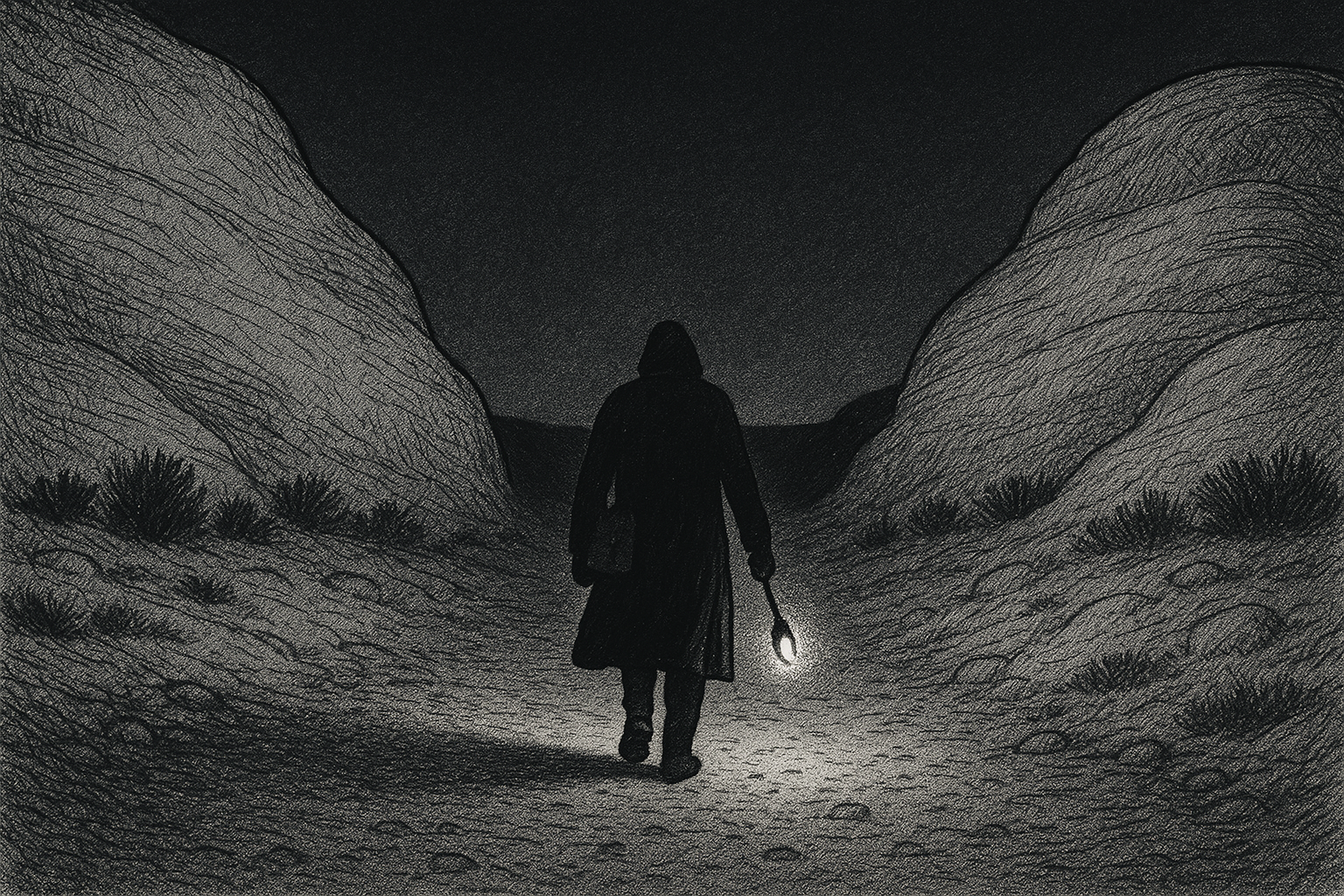
She opened the driver’s door.
The dome light did not come on.
She got in. She pulled the door closed. She did not start the truck immediately. She sat for a moment with her hands on the wheel and she looked back at the place where the wash was, which she could not see from here but knew the location of the way you know a thing you’ve mapped and walked and committed to your body. Then she started the truck and pulled forward on the gravel, slow, with no lights until she reached the BLM road, and after that she was gone.
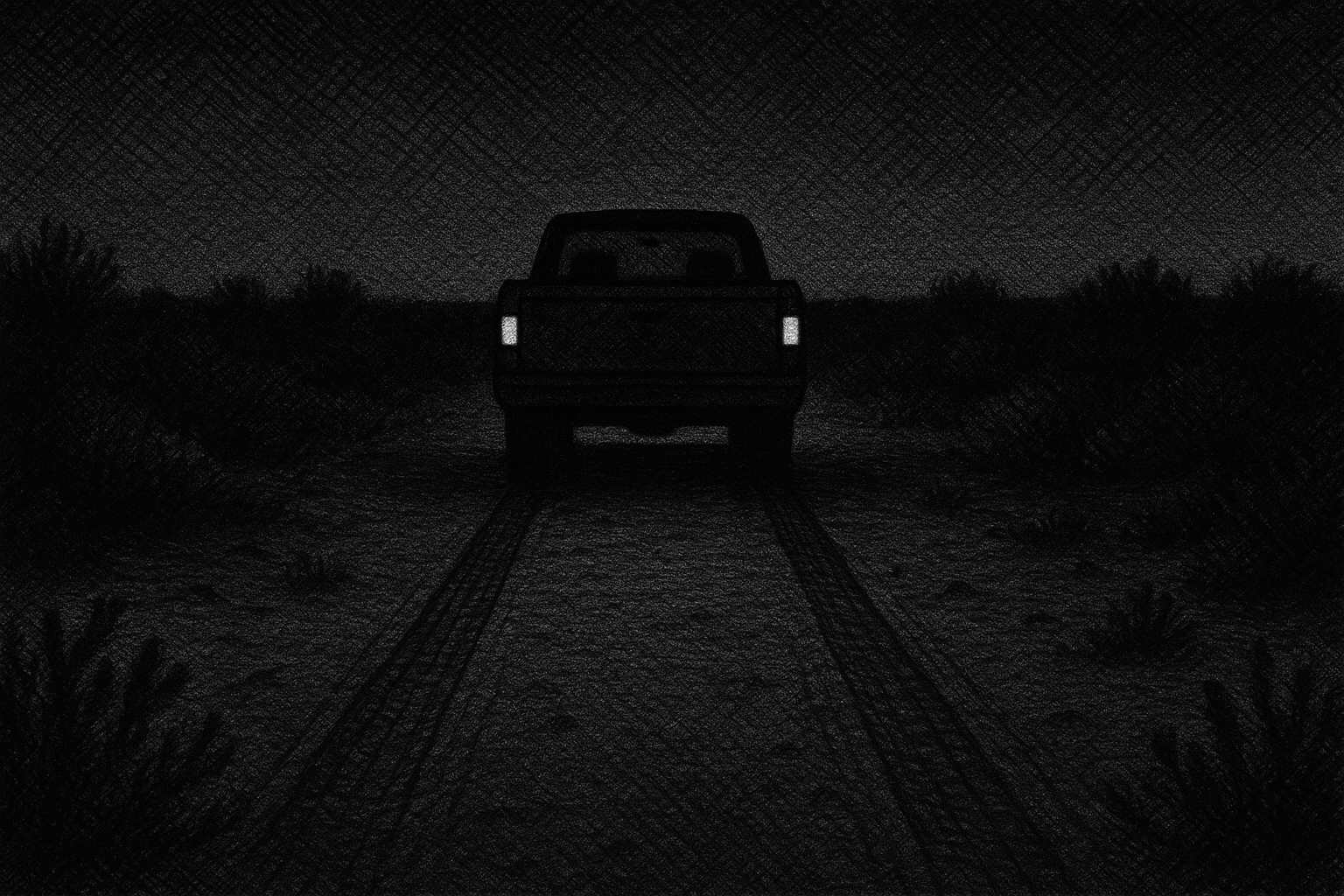
The desert went back to what it had been before she arrived, which was dark, and cold, and quiet, and large.
The radio went off at 4:47 a.m., which Audrey Briggs knew because she’d been awake since three.
She was sitting at the kitchen table in the dark with her coffee. The under-cabinet light was on — the one above the sink, not the overhead. She’d started leaving it on months ago, not by decision but by drift, the way you stop doing a lot of things when the reason for doing them is gone. The overhead made the kitchen look like a place where someone was waiting up. The under-cabinet light just meant somebody lived here.
The mug said WORLD’S OKAYEST DEPUTY. A Christmas present from her sister three years ago, before the sister had decided that the gift was a mistake and the sentiment was a mistake and that Audrey needed things she’d never once asked for. The mug was the last thing from that period that Audrey still used. She didn’t know what that meant, if anything. She mostly didn’t think about it.
Outside, the construction trucks were starting up Bluff Street. Quarter to five. She could time them by the sweep of headlights across the far kitchen wall — the angle changed as the truck reached the bend — and she’d been watching them long enough that she could tell a flatbed from a dump truck from the shadow alone. She didn’t know why she had learned this. She knew she had.
The chair across from her was where her mother had sat. Audrey used it for her jacket. She used the chair she was in now too, of course, but she’d been choosing this particular chair since she moved back, not because it was better but because it meant she was facing the window and not the room. She faced the window and drank her coffee and watched the headlights change the wall and that was St. George at quarter to five: the only version she could stand. Empty. Nobody waiting to ask her where she’d been going to church.
The call came from dispatch and not from another deputy, which meant nobody had eyes on it yet.
“Briggs. You up?”
“I’m up.”
“We got a body. Female. Out by Yellow Knolls, the wash that runs off the BLM road.”
“That’s Arizona.”
“Yeah. Mohave County’s two hours out. You’re forty minutes.”
She was already moving. Boots, jacket, holster. The Tahoe started on the second try, which was better than yesterday. She backed out of the driveway without looking and pointed the truck south toward the line.
Forty minutes was a lie. She made it in thirty-two.
She didn’t think about Tom on the drive. She had rules about that. The rules had been the same — she had not made them so much as found them already in place. She enforced them. The road went south and the town dropped behind her.
Past the airport. The runway lights pale in the pre-dawn, a row of them running into the dark until the curve of the earth took them. Then the airport was behind her too, and the town was gone, and it was just the Tahoe and the desert and the particular darkness of the Strip at four-fifteen in the morning — which was not the darkness of anywhere else she’d ever driven. It was large in a way that was not poetic. It was large the way a thing is large when it doesn’t know you’re in it. She had the heater running but cracked the window anyway. The cold came in and she let it. It helped with the rules.
The BLM road was where dispatch said it would be. Graded, washboarded, the kind of road that could rattle the fillings out of your teeth if you took it above thirty. She took it at forty.
The knolls came up on her right. Pale humps in the half-light, the color sandstone gets just before the sun finds it. She slowed. The ranger who’d called it in had marked the turnoff with a strip of orange flagging tape on a piece of cholla, which Audrey appreciated; rangers were generally the most useful people in any direction.
She parked. Killed the engine. Got out.
The first thing she heard was nothing. The second thing was the click of cooling metal under the hood. The third thing was her own boots in the gravel, which sounded louder than they should have.
She stood there a moment before she walked. Not hesitating — reading. The knolls were gray-blue in the east-light. Cold the way the desert is cold before the sun gets to it, a cold that went into the ground instead of the air. Her breath was visible. The wash ran below and to her right, the cut between the two largest knolls, and she could smell it — the particular mineral smell of a dry wash before the day warms it, creosote underneath, and something else she’d learn to name later.
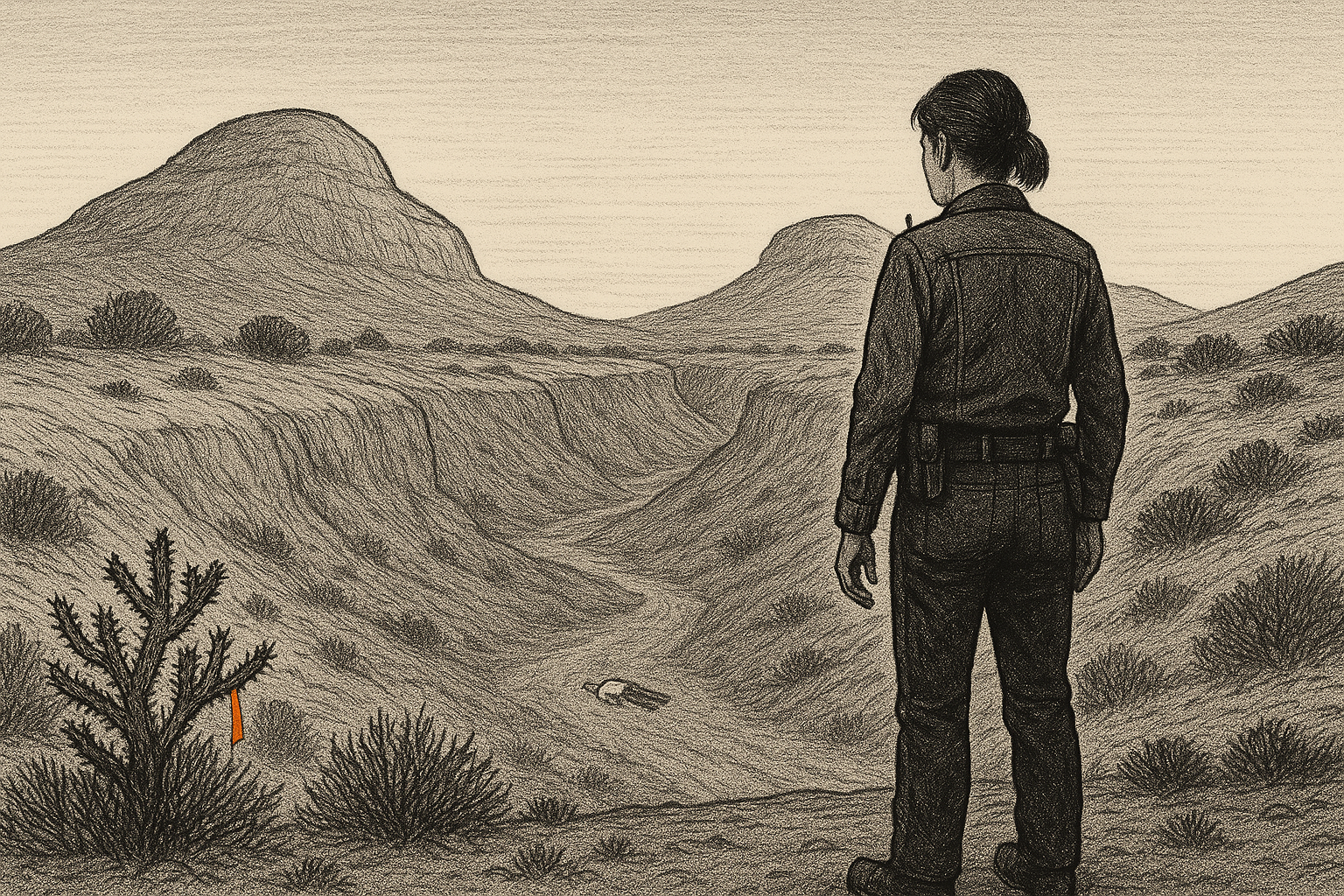
Something caught the first eastern light at the far rim of the wash — a small bright flicker, maybe fifty yards back over her left shoulder, the kind of thing the desert threw at you in the half-dark. Mica in the sandstone. A beer can left by a hunter. She filed it and kept walking.
The wash was sixty yards off the road, down the cut. The body was visible before she got there — a shape that didn’t belong, the white of a t-shirt the only true white in the scene. Audrey stopped at twenty yards and took it in. You always took it in from a distance first. You looked at the placement, the angle, the relationship of the body to everything around it, before you got close enough to start losing that information.
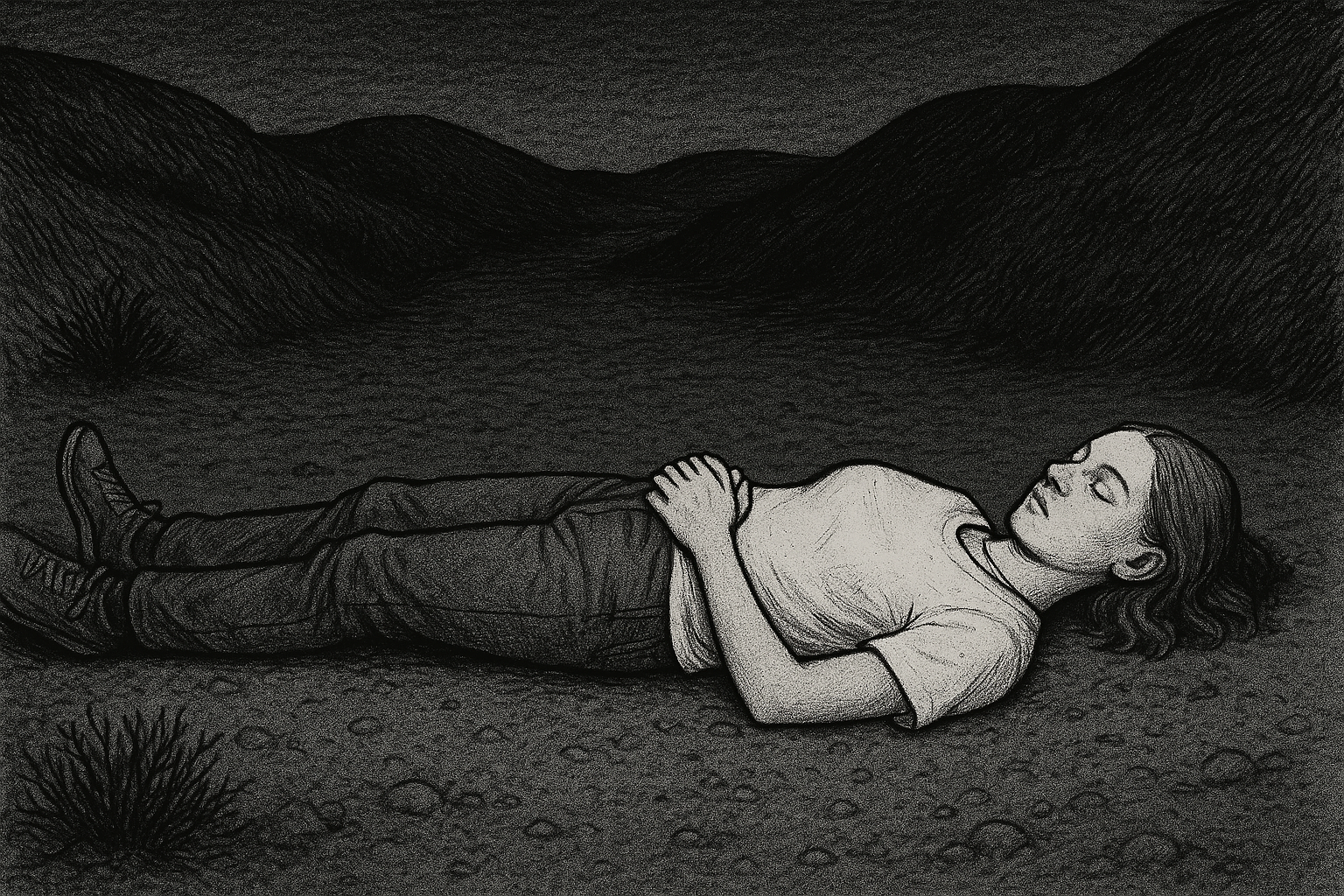
The girl was on her back. Hands folded across her stomach, left over right, like somebody had put her down for a nap. Hair brushed. Face composed. Jeans, sneakers, a gray t-shirt with a faded Old Navy logo at the chest. The clothes fit her wrong. They fit her the way clothes fit a kid who’d just left home — not cheap, not wrong in size, but not worn enough. Not hers yet.
She walked the rest of the way in and crouched.
The girl was nineteen, maybe twenty. Light brown hair parted in the middle and brushed back from her face in a way that no one did by accident — someone had taken a brush to it, or a comb, recently enough that it had dried that way. No makeup. No jewelry except a thin string at her throat that turned out, when Audrey leaned closer, to be a piece of nylon cord with a small key on it — a luggage key, the kind that came with a hard-shell suitcase from K-Mart in 1995. Audrey had had one like it. You could buy them at any number of places for next to nothing. She did not touch it.
The face was young in the way you couldn’t mistake. Not a face that had learned yet to be careful with itself. Whatever the girl had been feeling in her last hours, none of it had settled there permanently. The skin was clear. Audrey took a photograph and moved on.
No visible wounds. No blood on the clothes, no blood on the ground. Her lips were not blue. Her fingernails were not blue. Whatever had killed her had not been violent in the way the body would show. The ME would tell her more — would have to tell her more, because there was nothing here to read yet, just the absence of the obvious.
Audrey looked at the hands.
Working hands. Ink on the right index finger, heavy at the side near the nail — the kind of stain you got from gripping a pen hard, which you did when you were writing in secret and wrote fast because you couldn’t afford to write slow. Callus at the base of the right thumb. A small burn on the inside of the left wrist, healed badly, the way kitchen burns healed when nobody put the right stuff on them in time. Hands that had wrung laundry and weeded gardens and held needles. Hands that knew what work felt like because work had been the whole of the world they grew up in.
She’d grown up around hands like these. Not these exact hands — these belonged to this girl, this nineteen-year-old lying in the wash below Yellow Knolls — but hands with this grammar. The women in her mother’s ward had hands with this grammar. The kind of hands you got from a life that was all one direction: feed, clean, tend, repeat. The women she remembered had worn them like a credential and a complaint at once. She’d been eleven when she understood you could have both. She’d been twelve the last time her father drove her through a town they weren’t supposed to be looking at, on the way back from somewhere her father had business, and she’d looked out the truck window at a woman hanging washing in a yard, and the woman’s hands were these hands, and her father had said without looking away from the road: don’t look. She had looked. She didn’t remember the woman’s face. She remembered the hands. The way they moved with a kind of total competence and total confinement at once, doing the work the only way there was to do it.
She stood up. Walked a slow perimeter. Twenty feet out, then ten, then five. The ground around the body was disturbed but not in any way she could fully read at half-light. One set of impressions leading from the direction of the road — her own boots, she confirmed, matching the pattern she’d made on the way in. Under those and beside them, the older marks: a partial, erased, where someone had come and gone and smoothed the going. Not perfectly. Nothing was perfectly. But carefully. The sun was three minutes from the horizon and she wanted it up.
The desert at this hour was not peaceful. The yellow-knolls place file in her head — the one she’d been building for twenty-three years of field work — said that correctly. Not peaceful: indifferent. The distinction mattered. A peaceful place absorbed you. This place just didn’t notice you. The wash hadn’t arranged itself for the body. The creosote hadn’t pulled back. The cold was the same cold it had been yesterday morning with nothing in it and the same cold it would be tomorrow. Whoever had put this girl here had made a very private decision in a very public room, and the room didn’t care.
She got out her phone and took the first set of photographs. The body. The surrounding ground. The placement of the hands. The cord at the throat. The burned wrist.
She was taking the close-up of the hands when the sun cleared the horizon, and the knolls went from gray-blue to yellow in about forty seconds, and the wash filled with the kind of light that made everything look like something, and Audrey stood in it and felt the specific weight of what she was holding in her hands. Her phone. Photographs of a girl she didn’t know. Photographs she had taken on a case that wasn’t technically hers, in a county that wasn’t technically hers, forty miles from her own jurisdiction in a direction that the department didn’t expect her to go.
She was already going to go.
She’d known that since the moment dispatch said Yellow Knolls and she’d said That’s Arizona and dispatch had said You’re forty minutes. There was no question in it. The question was what shape the going was going to take, and she’d figure that out when the Mohave County deputy arrived.
She had an hour and thirty-eight minutes to wait.
She used the first twenty of them walking the wider perimeter — fifty yards out, then a hundred, a slow grid in the gravel and the creosote. Nothing. No second set of tracks she could distinguish from her own. No cigarette end, no wrapper, no evidence that anyone besides the killer and the dead girl had been here recently, and the killer’s tracks were gone or made to be gone. Whoever had brought the girl here had been careful about the approach and careful about the leaving and the desert had helped, because the desert was indifferent that way — it didn’t hold evidence as a favor to the law. It held it by accident and released it the same way.
She went back to the body at quarter past six.
The thing that kept pulling her attention was the clothes. They were cheap — not community-issue, which tended to run to specific cuts and fabrics, but not quality either. Walmart jeans, Old Navy shirt, sneakers of the off-brand variety that ran nine dollars at a discount rack. Someone had bought them, or had them bought, or had helped the girl acquire them without the community knowing. The jeans were a size that fit. The shirt was one size too large, the way girls bought shirts when they were buying for the first time from a store they’d never been in and weren’t sure about their own measurements. Audrey had worked vice for nineteen years. She knew the profile of a girl who was leaving and the profile of a girl who’d already left, and what she was looking at was the first kind. The girl had bought these clothes to walk out in. She hadn’t walked out in them. Someone else had dressed her in them after, and that fact — the care of it, the specific cruelty of that care — was the thing Audrey needed to set aside or it was going to interfere with the work. She set it aside.
She photographed the cord at the throat a second time, from a different angle. The luggage key was brass, tarnished, with a small loop at the top where the cord threaded through. The kind of lock you found at the bottom of a closet that had been sitting there since before the girl who owned it was born. What mattered was not the key but what the key was for, and what the key was for was not here.
At six-forty she ate a Nicorette and stood at the rim of the wash and looked south. You couldn’t see Colorado City from Yellow Knolls. The land rose and folded before you got there, scrub and sandstone and the pale cuts of dry washes, the Strip running south until it hit the canyon country and stopped being drivable. She chewed her Nicorette and looked at the sandstone and thought about what kind of person knew this road at three in the morning and had reason to be on it.
She chewed her Nicorette and looked at the sandstone and thought about what kind of person knew this road at three in the morning and had reason to be on it.
She didn’t have an answer yet. She had a body and a cord and a luggage key and the grammar of the girl’s hands and the smell of the wash in the early morning, and that was what she had. It was enough to start.
At seven she walked the perimeter one more time, smaller this time, tightening her grid, looking at the ground with the sun at a better angle. She found nothing new. The ground was chalky caliche in some places and loose gravel in others and neither was ideal for holding a print. The area directly around the body had been compressed by the placement and smoothed afterward, which told her something about method and care that she filed with the rest of what she was filing.
She was back at the body, standing, when she heard the engine on the BLM road.
The Mohave County deputy got there at seven-twelve.
He came down the BLM road in a white Ford Expedition with the county seal on the door and a gas-station coffee in his hand. She watched him park behind her Tahoe, get out slow, stretch his back with both hands at his kidneys. Late forties. Thick around the middle in the way patrol cops got when the job became the truck. He had the look of a man who had driven two hours and was not going to say that the drive had put him in a bad temper, because he had been a cop for twenty-two years and showing a bad temper at a scene was a thing you simply didn’t do.
He kept the coffee.
“You Briggs?”
“I am.”
“Hugh Pinney. Mohave County.”
“Long drive.”
“Two hours and change. Roads were empty at least.”
He looked at her first — a quick professional read, the kind cops gave other cops before they gave them anything else — and then at the wash, and at the road behind them, and finally, almost as an afterthought, at the body. He took a long pull of his coffee. A Chevron cup, the large size, and it was already most of the way down. Man had probably filled it in Kanab and not stopped since.
“You secure the scene?”
“I did.”
“You photograph it?”
“I did.”
“You touch anything?”
“No.”
He nodded. He stood there for what felt like a long time. The sun was up now and the knolls were yellow and the cold was coming off the wash in slow stages, the way cold left the desert when the sun found it — not all at once, but in patches, until there was none left.
“Briggs. I’m going to be straight with you.” He turned the coffee cup in one hand, a slow rotation, looking at the label rather than at her. She’d seen this before — a man working out what he needed to say and not quite ready to say it yet. “I got two deputies in the field today and one of them is at a structure fire in Beaver Dam. I am the closest thing this county has to a homicide investigator and I am, you can probably tell, not one.”
“Okay.”
“What I would like to do — what would benefit everybody, including this young lady on the ground — is have you keep working it. As a courtesy. Off the books or on, I don’t care. You write it up however you need to. I’ll back whatever paper you put together. But somebody who actually wants to find out what happened to her needs to be on this, and that ain’t me.”
She looked at him. He looked back. Neither of them said the obvious thing, which was that what he was proposing was irregular at best and unlawful at worst, and that they both knew she was going to do it anyway.
“All right,” she said.
“All right.”
He drank his coffee. They stood there together over the body for another minute. The coffee cup was almost empty now and he held it the way you held an empty cup when you’d been carrying it for two hours and it had become part of your hand — not drinking from it, just holding it, because the alternative was to set it down somewhere in the desert and that would be littering and Hugh Pinney was not a man who littered. A ground squirrel had appeared on the far side of the wash, sitting very still on a rock and looking at nothing in particular. Hugh watched it the way a man watched something when he was thinking about something else.
“You from down here originally?” he asked.
“St. George.”
He reached for the hat he was no longer wearing — the old reflex, hand to the head and then back down, self-correcting without embarrassment. She’d noticed it when he first walked up and she noticed it again now. Twenty-two years of wearing a hat and then at some point stopping, and the hand still looked for it. She thought about what that was like. To reach for something that wasn’t there anymore. To do it without noticing, and notice it, and keep going.
“You know that town she’s from?”
He nodded south and east, toward Colorado City, even though you couldn’t see it from where they were standing. She knew the direction well enough that the nod was redundant. She’d known the direction since she was twelve.
Something went through her — not memory exactly, more like the shape of memory, the outline without the content. Her father’s truck on a two-lane road. The pink of Canaan Mountain in the early morning light. The particular quality of driving through a place you were not supposed to be looking at and looking anyway.
“I know it,” she said.
“Then I am even more grateful,” he said, “than I was a minute ago.”
He finished his coffee. He stood there a moment with the empty cup in one hand and looked down at the girl in the wash and his face did the thing faces did when they were not going to do anything because the alternative was worse. Then he looked at Audrey, just a look, the kind that didn’t ask for anything and didn’t promise anything and was mostly just acknowledgment — I see you, I see what you’re taking on, I know what I’m handing you — and she received it the same way he sent it, without commentary.
He told her the medical examiner in Kingman would be up by mid-afternoon. He told her he’d call her with the body’s identification as soon as they had one. He shook her hand when he left, which surprised her — a real handshake, not the perfunctory brush that constituted most inter-agency courtesy; he gripped her hand and shook it once, firm, the way you shook the hand of someone you were handing something real to. Then he got back in the Expedition, set the empty Chevron cup on the dashboard where it sat upright for approximately two seconds before the road vibration laid it on its side, and he drove away.
She stood until the sound of his engine faded into the dry air and was gone. Then it was quiet again, the way it had been when she’d first arrived. Washes and sandstone and the November sky going from pale to proper blue. The knolls were fully yellow now. The wash was warming.
She looked south. She looked north. She looked at the BLM road, empty in both directions, and at the flagging tape on the cholla, which moved in a small wind she hadn’t felt on her face. She looked at the wash and at the girl in it and at the way the morning light had settled over everything with the absolute neutrality of light that had no idea what it was illuminating.
Then she crouched down next to the body. Closer than she had let herself before.
“All right,” she said, to nobody, to the girl, to her own hands. “All right.”