Chapter 9
The Call
Audrey crossed the kitchen in three strides and picked up the TracFone on the fourth ring.
“Yes.”
A pause. The voice on the other end was small, and careful in a way that meant the person using it had chosen to call, not been pushed into it.
“Is this the deputy.”
“Yes.”
“It’s Ruth.”
Audrey sat down at the kitchen table without taking her eyes off the wall.
“Ruth. Tell me where you are.”
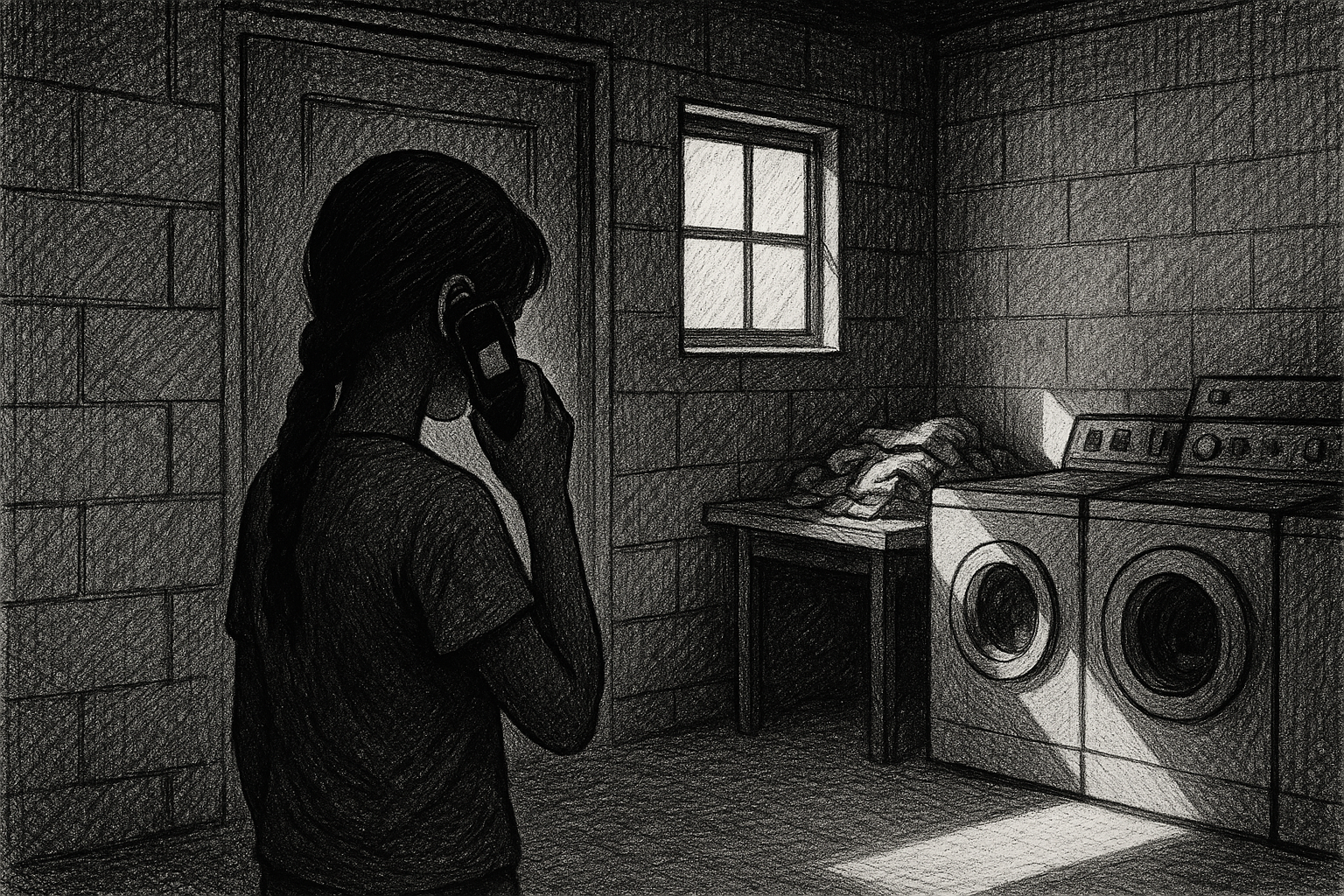
“In the laundry shed. There’s no one in here for fifteen minutes. Then someone comes.”
“All right.”
“Jared isn’t here. He’s at the other place. The ranch on the Strip. The one nobody goes to. South of the line, two hours out. There is a fence with a chain on it but the chain is for show. The road is on the BLM map but the lock is the family’s lock.”
“How do you know he’s there.”
“Because she came back at five this morning and her boots had red mud on them. There is only red mud at the ranch. Not here. Not anywhere else she goes.”
“Is he alive.”
“He was alive yesterday.”
Audrey gripped the edge of the table with her free hand. Through the kitchen window the sky above Bluff Street was going dark, that particular November dark that comes down fast once it decides to come.
“How are you calling me,” she said. “Where did you get this phone.”
“Sariah’s. I knew where she kept it. After she didn’t come down on Monday I went and got it. I was going to throw it away. Then today I didn’t.”
Audrey thought about what it cost a thirteen-year-old to say today I didn’t in a voice that flat. She thought about what kind of thinking had happened between the decision not to throw the phone away and the decision to use it.
“Marva doesn’t know you have it.”
“She doesn’t know today. Tomorrow there will be eyes on me she doesn’t have on me today. You should come tonight.”
“I’m coming tonight.”
“She is coming back to the ranch tonight too. After dark. Maybe ten, maybe later. She is bringing two of the men from the household. They are not the ones Hugh Pinney knows.” A pause so short it barely existed. “You have to go before she comes back.”
“Ruth.”
“Yes.”
“Where is the key.”
“Jared’s truck. In the glove box under the registration. He kept a copy because he thought one of us might need it someday. I think he meant me.”
“Jared’s truck is in evidence.”
“Then you will need to get it out. Or break the lock.” A beat. “The lock is not a real lock, deputy. You do not need a key. You need to be there before she is.”
“All right.”
“I have to go.”
“Ruth.”
“Yes.”
“If something happens before tonight. If she finds out about the phone and you have to run — you go to the cottonwood at the southwest corner of the park at 200 South and Main in Hurricane. Sit on the green bench. A woman named Linnea will come for you. She has done this before.”
Silence on the line. Audrey pictured her — a girl she had seen for no more than three seconds, in a yard, between a door and a gate, small enough to be a seventh-grader, her braid pulled over one shoulder in both hands.
“You remember that,” Audrey said.
“I will remember that.” The line clicked.
—
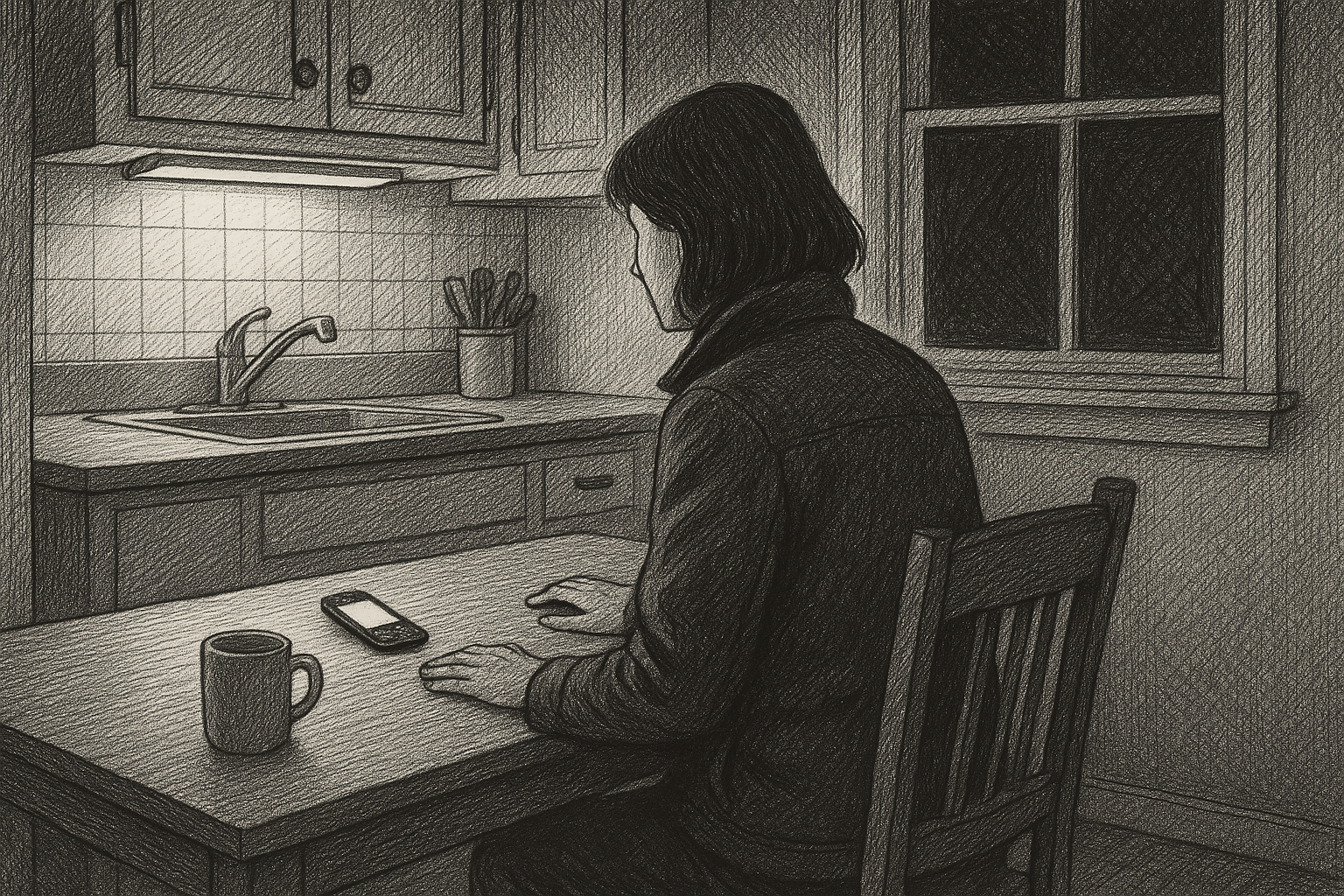
Audrey sat at the kitchen table without moving. One minute. Maybe two. The TracFone was warm in her hand from the call.
Then she put it down and picked up her personal phone and dialed Hugh Pinney.
It rang four times. Five. Hugh picked up on the sixth.
“Briggs.”
“I need you on a road in the next forty minutes.”
“I can’t.”
She had not been expecting that. The silence on her end was a beat too long.
“What.”
“Briggs. I got a call this afternoon from Kingman. From the sheriff himself. He told me — and these are his words — that the Sariah Jessop case is not, in fact, my case, and that I am to desist from any further activity involving Washington County personnel relating to that case until the matter is taken up by his office. He said it twice. In two different ways. He used my pension as an indirect noun.”
“He pulled you off.”
“He has pulled me off. I am sitting in my house in Kingman and I am, on direct order, not driving anywhere tonight. I am sorry, Briggs.”
She could hear him in the silence.
“Did Mohave County figure out what we did at Yellow Knolls.”
“They did not. They figured out that I am a man who knew where to get gas at three in the morning on the Strip, and a deputy from Washington County was riding with me, and the body of a Colorado City girl came back tox-positive for a household compound, and someone from Mohave County records pulled the Jessop family file two hours after Washington County pulled it. The sheriff did not need our paperwork to figure us out.”
“Okay.”
“Briggs.” A pause that was not Hugh looking for words — Hugh had the words; he was deciding whether to say them. “I cannot help you do it. If it goes wrong, I never knew.”
“I understand.”
“Tell me what you needed me for.”
“I needed you to ride south with me to that ranch. Marva is bringing him there tonight.”
“Christ.”
“Yes.”
A long silence.
“Briggs. Take Linnea Aspen with you.”
“I know.”
“You take her or you don’t go. You do not go alone onto that property. Whatever you need to do out there, you need a witness who is not law enforcement and is not from that community. Linnea is the only person in this county who fits.”
“I know, Hugh.”
“You promise me.”
“I promise you.”
“Then go.”
He hung up.
—
She dialed Linnea’s son’s number in Salt Lake. She had written it on the inside cover of the small notebook she kept in her jacket pocket, the day after she found the Post-it on the open book.
The phone rang twice.
“Hello.” Linnea’s voice. Not her son’s.
“It’s Audrey.”
A silence that lasted exactly the right amount of time — not surprise, not hesitation. Calculation.
“Where.”
“Ranch on the Strip, south of the line. About two hours out. Jared is there. Marva comes back tonight at ten or after.”
“What time do you need me.”
“I’m leaving now. Three hours to the Hurricane truck stop puts us both there at the same time, if your son can drive you.”
“He is in the room.” Another pause. “He will drive me.”
“Linnea. You don’t — ”
“Audrey.”
She stopped.
“Tell me what to wear,” Linnea said.
Audrey told her. Dark everything, she said. Flat shoes. No book tonight.
“I will see you at the truck stop,” Linnea said, and hung up.
—
The house was quiet.
Audrey went to the front hall closet. She got the tactical flashlight, the spare magazine, the trauma kit she kept on the second shelf because every cop she had ever known kept one near the door. She zipped them into a duffel. She went to the bedroom and put her vest on over her shirt and stood for a moment in the dim — the only light coming from the kitchen, the under-cabinet strip above the sink that she left on the way some people left a television on, for company.
She looked at the room.
Her service weapon was already on her hip. She had not taken it off since the night she found Jared’s truck.
She turned off the kitchen light.
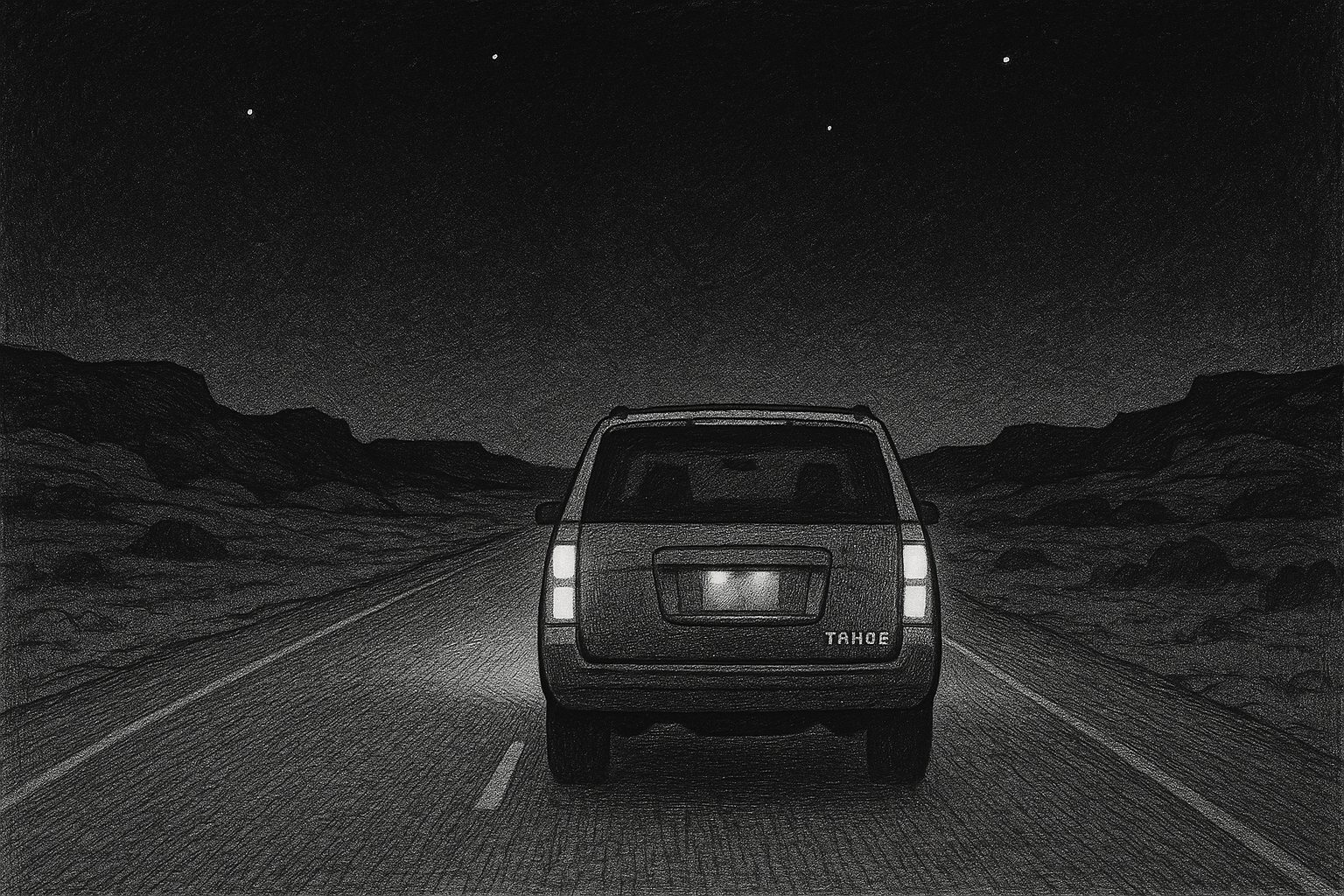
She locked the back door. She checked it once. She walked down the front steps and got into the Tahoe and sat for a moment in the cab before she started it.
The Nicorette was on the dash. She took a piece, folded it, started chewing. She started the Tahoe. The engine caught on the first try, which it hadn’t done in three days.
She turned south on Bluff Street.
The construction-crew headlights she watched most mornings from the kitchen were dark — the site had gone quiet hours ago — and the road was empty all the way to the interchange, the houses on either side lit up behind their curtains with the particular late-evening light of families who had nowhere to be. She watched them pass in her peripheral vision. She did not think about what she was going to find at the end of the road south. She drove and she chewed and she watched the dotted line come at her out of the dark, one segment at a time.
She passed the city limit sign without looking at it.
The night outside the Tahoe was clear and cold and very large. The mountains behind her dropped away and the land opened out into the Strip’s particular emptiness — no headlights in either direction, no fences worth noting, just the red rock going black in the last of the sky’s light and the road running south like a sentence that hadn’t finished yet.