Chapter 11
The Interrogation
The arrest was at the state line.
Marva had crossed it. That was the only thing that mattered. She had driven a household truck north onto US-89 at a quarter past noon, alone, and at the moment her front tires touched Utah dirt Audrey put the lights on and pulled in behind her. Marva drove for another half mile, slow, then signaled and pulled into a gravel pullout where there was nothing but creosote and a county trash can. She got out of the truck without being told. She did not turn. She put her hands on the hood. She let herself be cuffed.
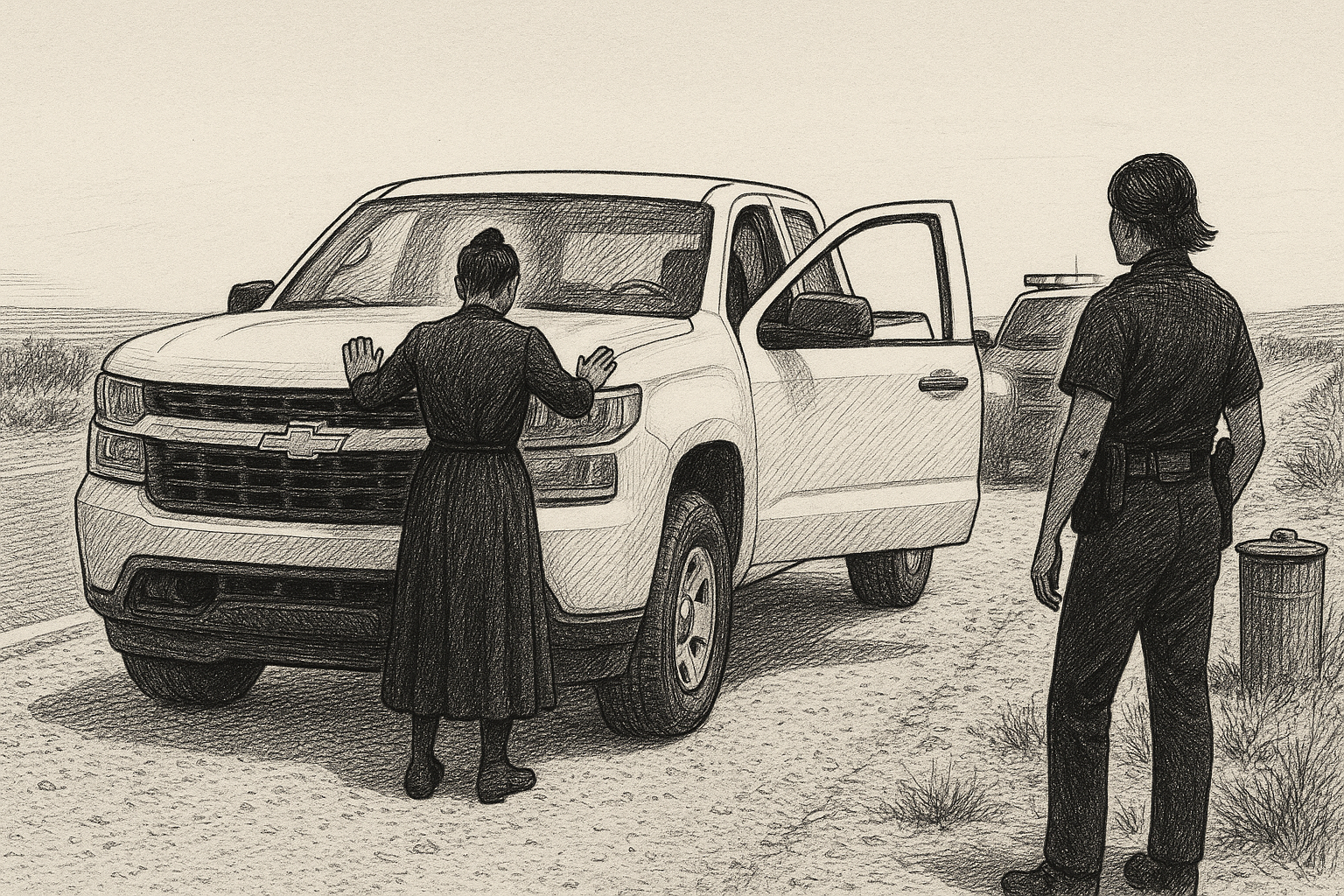
She did not speak on the drive to St. George.
The interrogation room at the Washington County office was small and lit too brightly, the way every interrogation room had been since the seventies. A table bolted to the floor. Two chairs, one bolted, one not. A two-way mirror set high in the wall behind Audrey’s chair, which she was not going to turn to look at. A recorder on the table. The recorder was the law’s recorder, and behind the mirror two recorders that were the department’s, and somewhere in Hugh Pinney’s truck out in the lot a third recorder that nobody in the building knew about and Audrey was not going to mention.
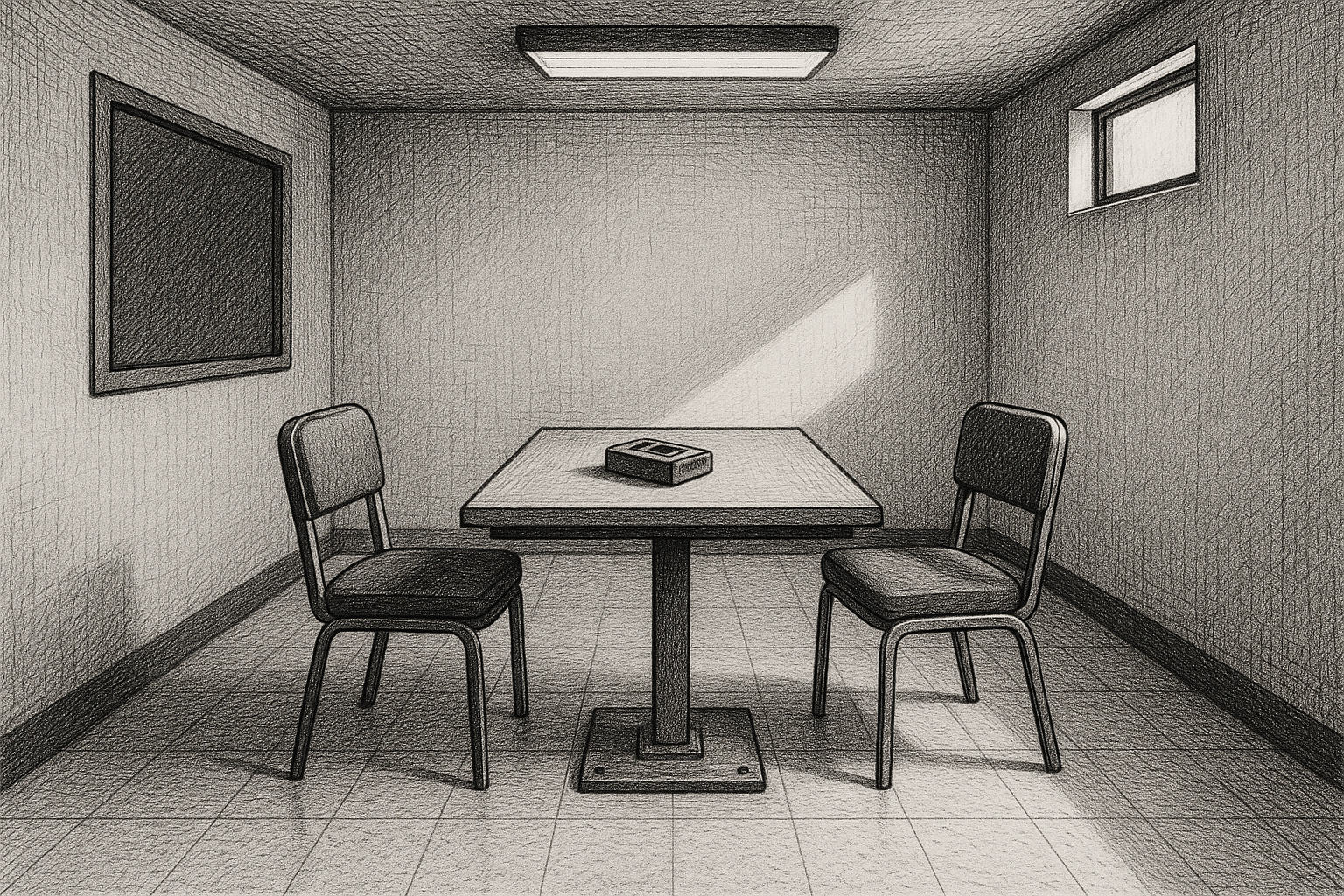
She sat down.
Marva sat across from her.
The cuffs were off now. Marva had asked for them off when they sat down and Audrey had taken them off without saying anything because the room was secure and the door was locked and Marva had not, in three hours, given any indication that she was going to do something with her hands besides what she was now doing, which was folding them on the table.
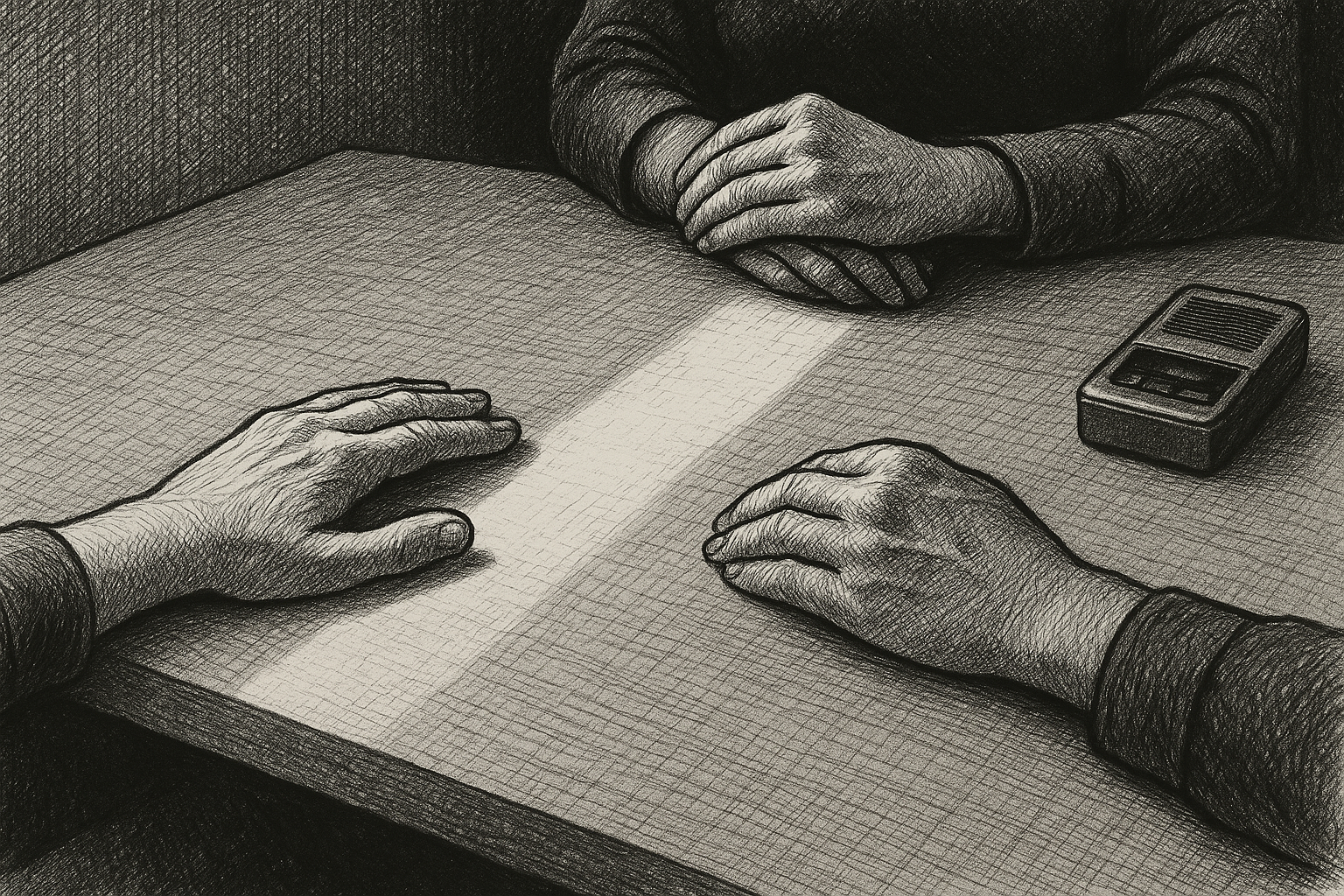
Left over right.
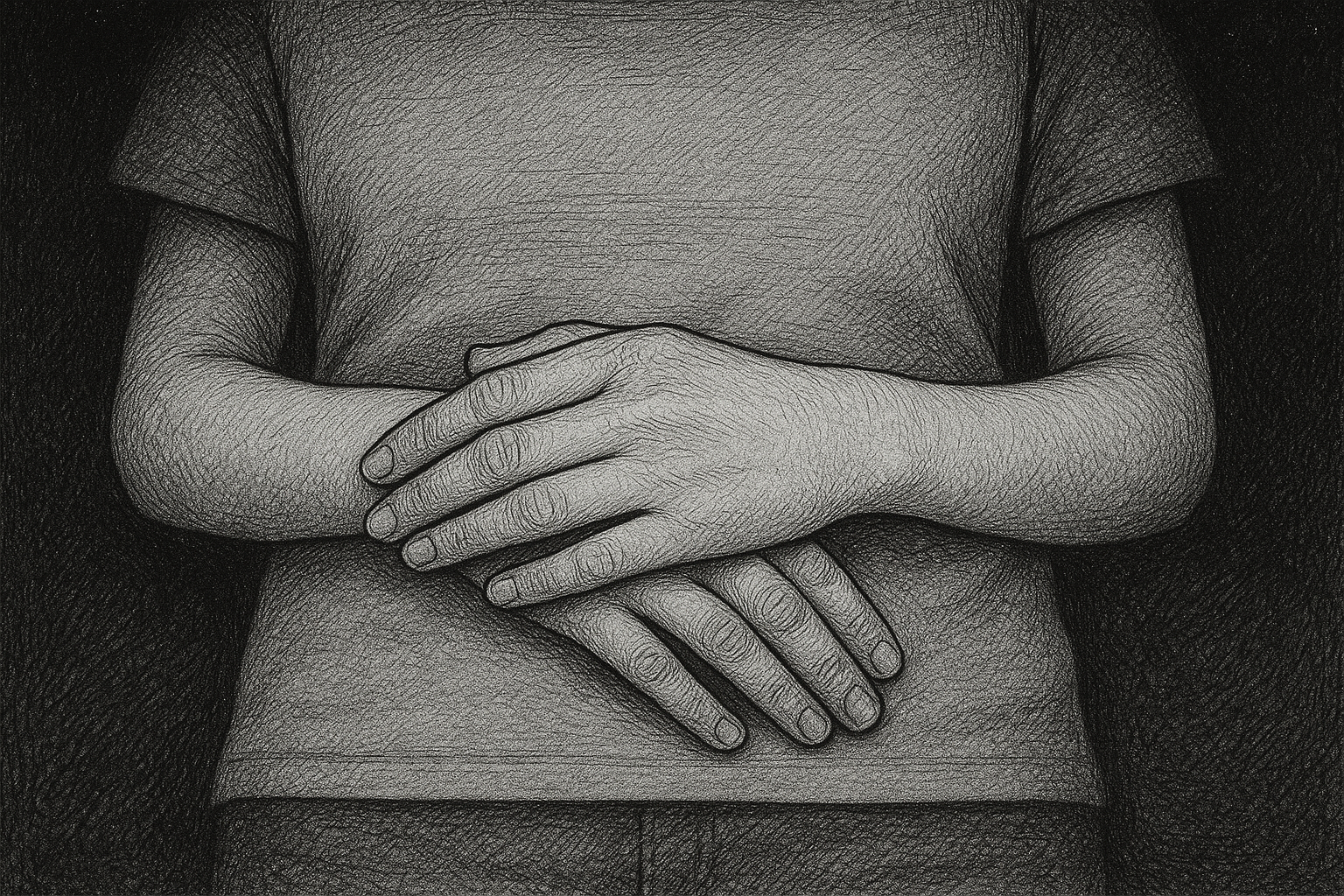
Audrey had been waiting for that.
She did not look directly at the hands. She looked at Marva’s face. She let one beat pass. Then another.
The afternoon sun came in through the high window in a single line across the linoleum.
“When was the last time you saw Sariah,” Audrey said.
“On the day she died. At dinner.”
“What did you serve.”
“Stew. Bread. Apple cake afterward.”
“What did you put in it.”
A beat. The first beat in which Marva had taken any time to answer.
“I will not answer that question. Not because the answer would convict me. Because the answer would make my husband decide things about our household that he should not have to decide alone. You will find what it was. The medical examiner will find it in his suite. I will not save him the work.”
“All right.”
“You are not surprised.”
“No.”
“That is because you have already decided what I did. You sat down at this table having decided. So we are not having a conversation about what happened. We are having a conversation about why.”
“All right.”
“Then ask me.”
Audrey waited. She had learned in Vegas that the silence between two people in a room is a resource and you do not spend it.
Marva waited too.
After a long minute: “How old is your daughter, Marva.”
“Fourteen.”
“When is she scheduled.”
The smallest movement of Marva’s right hand to her temple — once, twice, then back to the table. Audrey saw it. Audrey did not write it down.
“Within the year. She does not know. Or she does know, in the way girls of fourteen in our community know, which is to say she has not been told and has heard everything.”
“And Sariah’s leaving — ”
“Sariah’s leaving was visible enough to give my daughter the idea. Sariah was loud about it, in the way the women of that household understand loud. She was wearing the wrong clothes in our laundry. She was eating meals away from the family. She was writing letters my husband did not know she was writing. The other girls saw. My daughter saw. My daughter is — I have raised her. She will not run. But she will think about running. And a placement does not survive thinking. A placement survives belief.”
“So you killed her.”
“I killed her.”
“To keep your daughter from thinking.”
“To keep my daughter from thinking too long.”
Audrey looked at the recorder. Then at Marva. Then at the line of sun on the floor, which had moved a hand’s width since they sat down.
“Tell me how.”
“You know how.”
“I want it on this recorder.”
A long silence.
“Stew, bread, apple cake. The substance was in the cake. My grandmother used it on the chickens for mites; we keep it in the back of the canning shed. It is bitter when concentrated. The cake was sweet. The amount was small. The act was hours.”
“You stayed with her.”
“Until she slept. After that I did the rest of what I did.”
“You brushed her hair.”
“Yes.”
“You folded her hands.”
“Yes.”
“You put her in a t-shirt that wasn’t hers.”
“That was hers. It was where she had been keeping it. Jared brought it for her three months ago. It was the thing she meant to walk out in.”
Audrey wrote that down. It was the only thing in the conversation she wrote.
“Why dress her in it.”
Marva looked at her. The two women looked at each other.
“Because I wanted you to see her the way she had decided to be seen. I did not change her into a child of the household for you to find. I let her go in the clothes she had chosen. Then I laid her out the way I would lay any child of mine. I do not see those things as contradictions. They were both true of her. I treated both as true.”
“You drove her.”
“I drove her. The dome light in the household truck has been disabled since the week before. I did that one evening when no one was watching. I parked her at the rim of the wash. The east-facing rim, so the morning sun would find her.”
“You meant for the law to find her.”
“I meant for the family to find her. By way of the law. The law is a witness. The law is not the audience. The audience is a fourteen-year-old girl in my house who needed to be shown what running looks like when running is not allowed.”
“You wanted your daughter to see Sariah’s body.”
“I wanted my daughter to know that Sariah was found, and named, and buried, and that the running did not save her. Yes.”
Audrey did not write this either. She looked at Marva’s hands.
The burn scar on the back of the right hand was visible in the line of afternoon sun. Old. Healed badly. The skin puckered where Marva had grabbed the handle of a pot seven years ago that was too hot for what she grabbed it for. She had only ever seen the body. She had only ever seen the wrist of the body, which bore a smaller version of the same burn, in the same shape, on the inside of a girl’s left wrist.
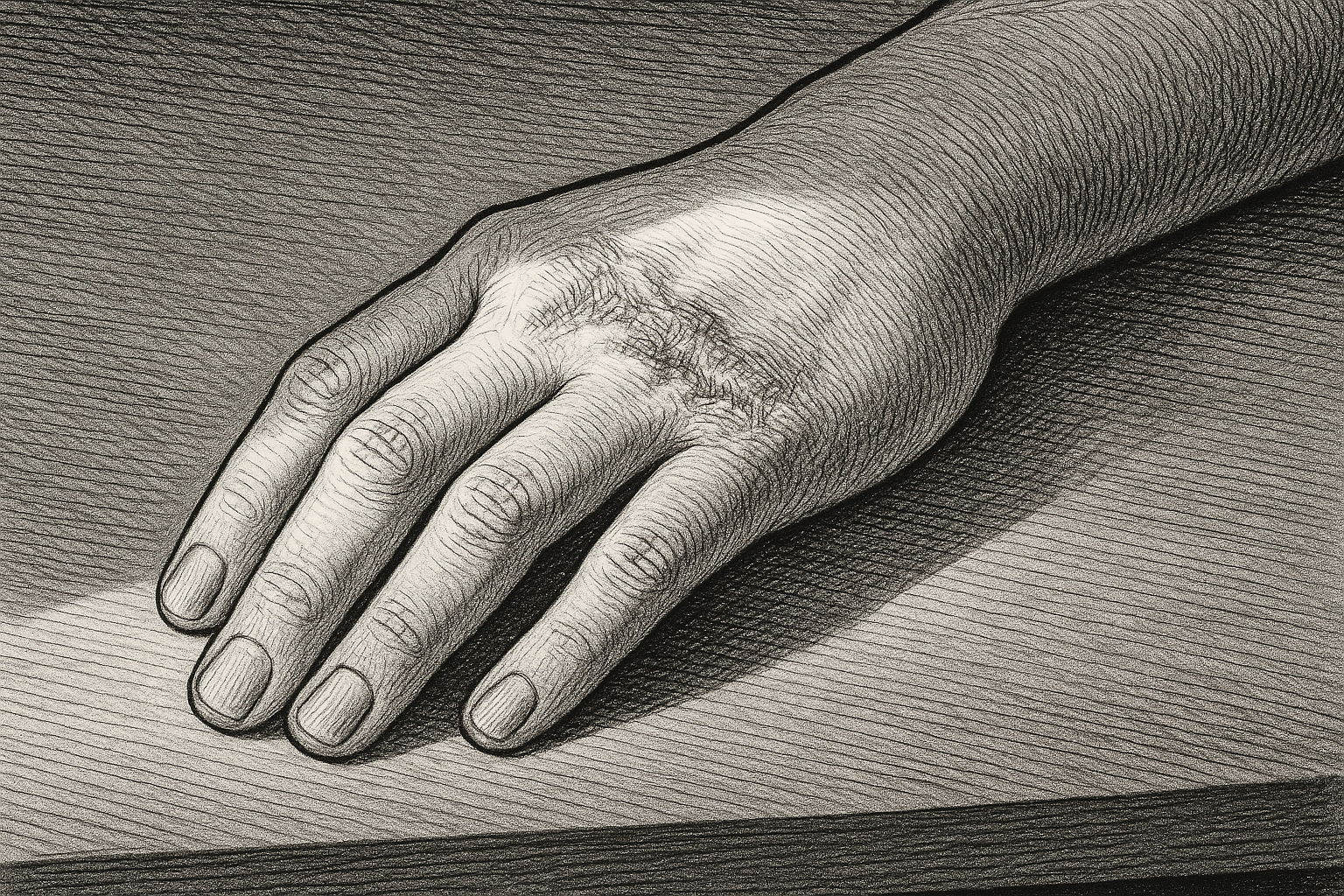
“You burned each other,” Audrey said.
“I’m sorry?”
“You and Sariah. The burn on her left wrist. The burn on the back of your right hand. Same shape. Same bad heal.”
Marva looked down at her hand for the first time since she had sat down.
“That was a long time ago,” she said.
“Tell me.”
“Canning peaches. The pot tipped. I caught the handle. She caught my arm. We both yelled and neither of us let go. She was twelve. I was thirty-four. The skin took weeks to settle. We never spoke of it after that. There was no need. We had matched.”
“You had matched.”
“The household burned us both that day. We carried the same mark for seven years. I did not think about it again until last month, when she had begun keeping the t-shirt at Jared’s hiding place, and I caught my own scar in the kitchen window light one morning, and remembered.”
“You remembered.”
“I remembered that the day the pot tipped, she had reached for me. Not for the pot. For me. To pull me back. And I had let her burn beside me because I had not, in that instant, been quick enough to push her clear.”
A long silence.
“And last night,” Audrey said.
“Last night I was quick.”
Audrey did not write this down. She did not look at the recorder. She looked at the woman across from her, whose hands were folded left over right on the table, whose burn scar was plain in the afternoon sun, who had explained an act in less time than most witnesses take to explain a parking incident.
The line of sun on the floor had moved a hand’s width again.
“All right,” Audrey said.
“All right,” Marva said.
Audrey turned off the recorder.
She stood up. She walked to the door. She did not look back at Marva, whose hands had not moved.
She closed the door behind her, and the lock clicked, and the corridor light was a different color than the room light had been.
She stood in the corridor for a long minute, her hand still on the door.
Then she went to write the paperwork.