Chapter 4
Tom's Hour
She took the 59 back through Hildale without looking at it, which was the first time in her adult life she had driven through those two towns and not rubbernecked the houses. It felt like a small kind of progress — like she had something now, a piece of paper in her breast pocket with a name on it, and the houses were just houses again because they weren’t the thing she was thinking about.
The sun was well past noon by the time she crossed back into Utah at the Hurricane side, and the Mojave light had gone from the merciful morning gold to the afternoon bleach that made the cholla look dead even when it wasn’t. Her air conditioning worked on a sliding scale that correlated to engine rpm, which meant on flat ground she got lukewarm air and on the hills she got cold. She took the hills slow anyway.
At the Maverik on Bluff Street she bought a TracFone for cash and a pack of Nicorette gum. The clerk was a kid in a green apron who did not look up from his phone while he rang her up. She appreciated that too.
She drove the last mile home with the windows open because the air had finally cooled off. The house on Bluff Street was dark when she pulled in. It was always dark when she pulled in. She hadn’t cured herself of the habit of leaving a light on for Tom, but she had trained herself to leave the one above the sink, which was a light you couldn’t see from the driveway, so that coming home didn’t confirm anything one way or the other.
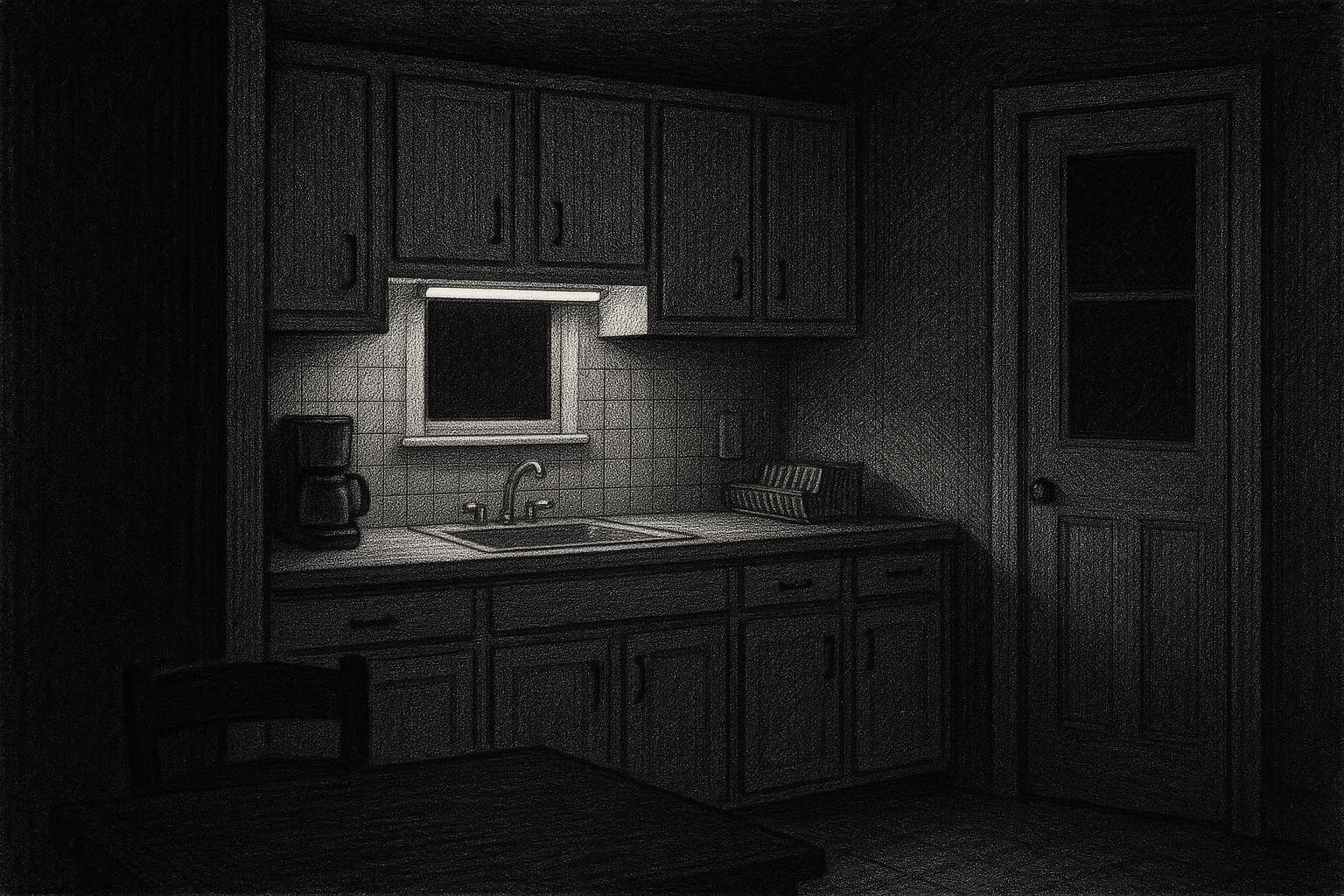
She unlocked the back door. Put her keys on the hook. Set the TracFone on the kitchen table. Made coffee.
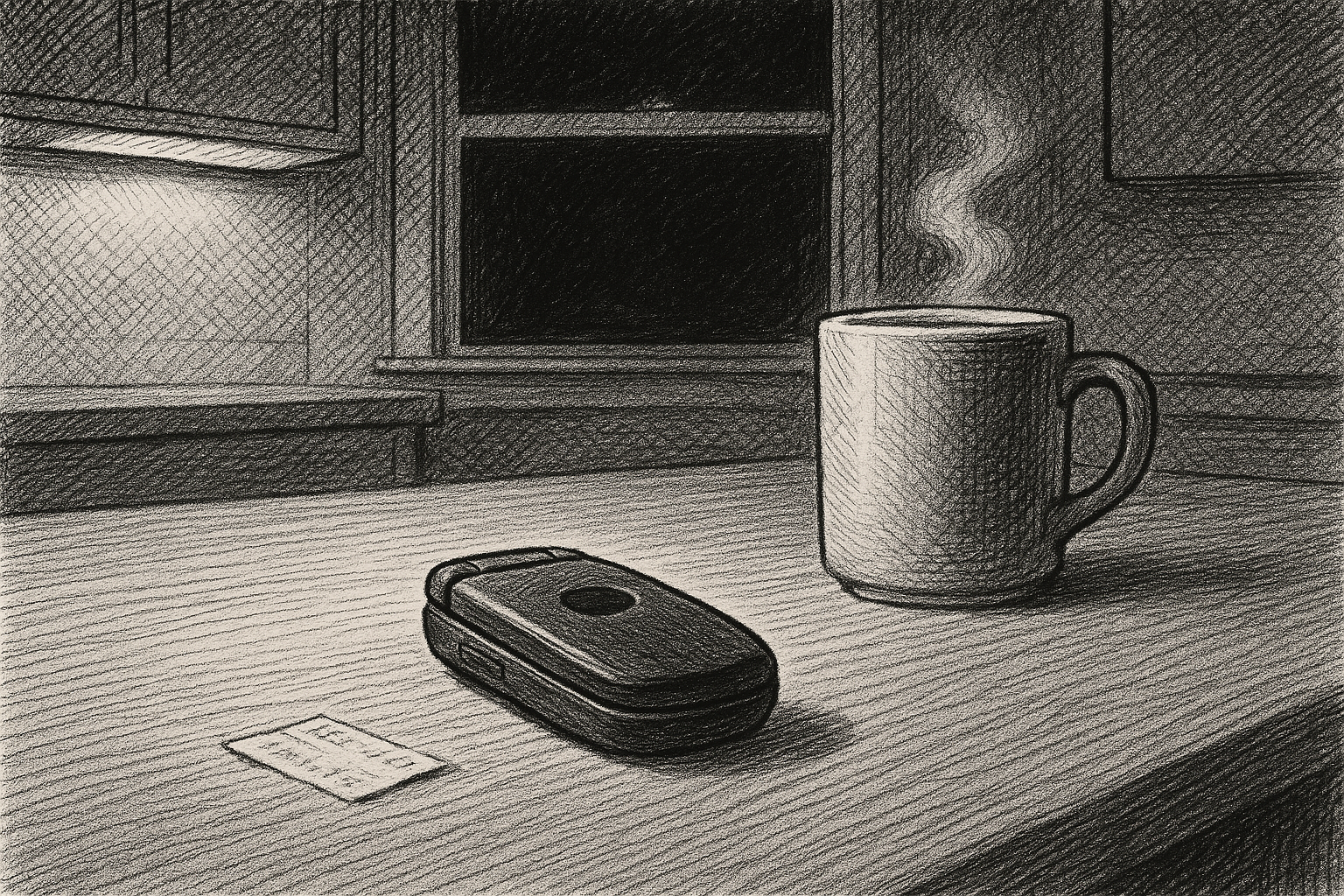
She sat with the coffee and looked at the phone. She looked at the piece of paper with Linnea Aspen’s name on it. She looked out the window over the sink at the back yard, which had been her mother’s garden and was now mostly gravel because she hadn’t had the time or the desire to garden and her mother had been dead for eleven years. The light above the sink was on. Small, yellow, the hum of the fluorescent.
She took her pen and wrote out what she was going to say before she said it. Two lines on the back of a grocery receipt. She had learned that trick in Vegas too — never made a cold call without writing the opening down. Voice on a phone is the only voice you’ve got in that moment, and if the opening falters you don’t get the conversation.
She dialed the number.
It rang four times. Five.
“Hello.”
A woman’s voice. Cautious. Not unfriendly. Not a voice used to unknown numbers.
“Is this Linnea Aspen?”
“Who’s calling.”
“My name is Audrey Briggs. I’m a deputy with the Washington County Sheriff’s Office. I got your number from someone I believe you know.”
A silence.
“You can hang up right now,” Audrey said. “I won’t call this number again. But if you’ll give me two minutes first I’ll tell you why.”
Another silence. Longer. Audrey waited through it.
“Is she dead.”
“Yes.”
“When.”
“Last night. Early this morning. I don’t know exactly.”
A sound came out of Linnea Aspen that was not a word. Audrey waited.
“Where,” Linnea said.
“The Arizona side. Yellow Knolls, south of the Utah line. She was left where we’d find her.”
“She was —” Linnea’s voice broke and came back. “She was supposed to leave in three weeks.”
“I know.”
“You know how.”
“I know some. Not all. I have the phone I’m calling you from. The other one — hers — I don’t have. I haven’t seen it. I believe somebody else has it now.”
“Yes. They would.”
Audrey let that sit. Then: “I need to meet you. In person. Tomorrow if you can. I will come to you. Or we can meet somewhere in between.”
“I’m in Hurricane.”
“Then tomorrow in Hurricane.”
Linnea didn’t answer for a while. When she spoke her voice had steadied, which Audrey respected.
“There is a park at the corner of 200 South and Main. A small one. There’s a green bench under a cottonwood tree in the southwest corner. Tomorrow at seven in the morning. I walk there every day. If I’m there you’ll know me, because I will be a woman of sixty-two in sneakers reading a book. If I’m not there you’ll know because I won’t be, and you should leave.”
“Seven o’clock. Green bench. Cottonwood.”
“Yes.”
“Linnea.”
“Yes.”
“I’m sorry.”
A silence.
“So am I,” she said.
She hung up.
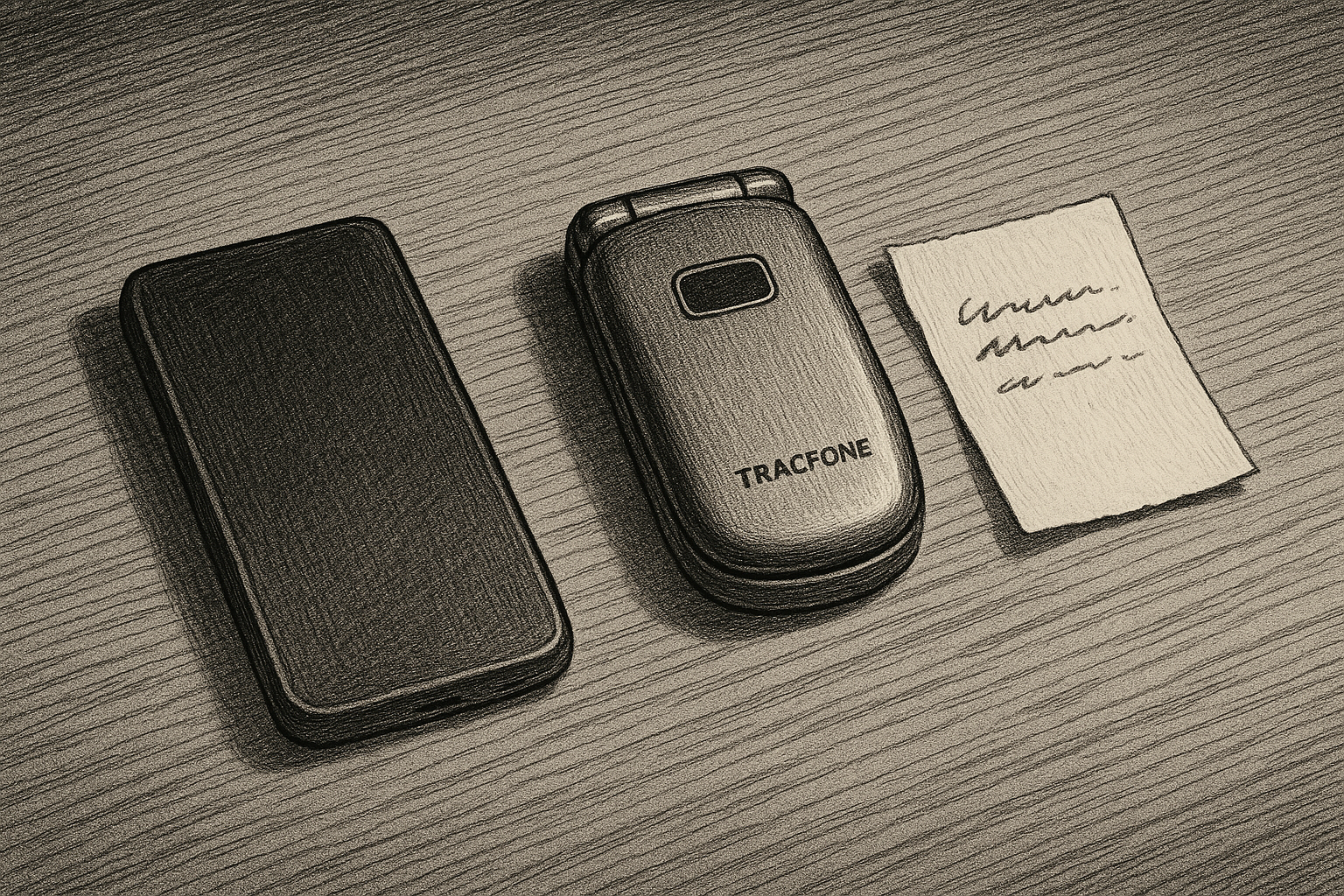
Audrey set the TracFone on the table next to the grocery-receipt script. She looked at the script. She had not used any of the lines she’d written.
She sat a long time. The light above the sink hummed. Somewhere outside a sprinkler started in a neighbor’s yard and stopped.
When her phone rang — her personal phone, in her jacket pocket, not the TracFone — she had to make herself pick it up.
“Briggs.”
“Hugh Pinney. Got a minute.”
“Yeah.”
“ID is confirmed. Sariah Jessop, nineteen. Matches the missing report her aunt — not her mother, her aunt — filed at seven-oh-eight this morning. Which is an interesting choice of a morning to file a missing report about a girl who was found on our side of the line at five-thirty-two. I thought you’d want to know.”
“I do.”
“ME’s preliminary is with me. I can email it. Short version is there’s no obvious cause of death on external exam. No trauma. No petechiae. No ligature. No defensive injuries. Tox is pending but won’t be back for forty-eight hours at the earliest. He says it’ll take the full suite — including the things he doesn’t normally run for — and he’s flagging it as a priority.”
“Okay.”
“Briggs.”
“Yeah.”
“I don’t like this one.”
“No.”
“You all right.”
“I’m all right, Hugh. Thank you for calling.”
“Talk tomorrow.”
He hung up.
She set her phone on the table next to the TracFone next to the grocery-receipt script.
The aunt had filed the missing report at seven-oh-eight. Hugh hadn’t said which aunt. There was only going to be one.
She got up. Washed the coffee cup. Turned off the light above the sink. Stood in the dark kitchen with her hand still on the switch.
She said his name out loud the way she hadn’t done in two years.
“Tom.”
The house said nothing back, because houses don’t.
She went to bed.